The Life of Plants

I just watched one of the most interesting Nature shows to date.  And no animal violence, go figure! /just a little snarky

The program was on plants and their ability to communicate with one another.

It started with showing a plant that could not produce its own food, so it was basically a vampire plant that sucked the life out of other plants.  It seemed to prefer certain plants over others–the tomato being one of them.  The scientists performed an experiment where they placed the vampire plant in the middle, with the tomato plant on one side, and another plant placed on the other side.

Using time-lapse photography, they showed the vampire plant doing this little whirling dance around and around until it finally latched onto the tomato plant.  It did this 9 times out of 10.  So, it basically chose the tomato plant.  Isn’t that interesting?

Then they went on to another plant in the west that was making a nuisance of itself.  The name escapes me, but it has destroyed native grasses that the cattle farmers rely on to feed the cattle.  The scientists were trying to find out why this particular plant was able to thrive.  The rancher pulled up a plant by its roots, and showed a small worm/larvae just going to town on the roots…and yet the plant was still thriving.  So there had to be another reason the plant was able to fend for itself.  They discovered that it was sending out chemicals via its roots that killed off other competitor plants’ roots.  Isn’t that amazing?

They also said they knew that plants sent off scents, but they discovered that they also send off warning scents, or what amounts to a “scream” by the plant when they are being attacked.   They illustrated this by stating that the smell associated with freshly mowed grass is the grass “screaming” from being attacked.  The theory is that the plants are trying to warn the other plants that they are being attacked.  The other plants in the area beef up their defense mechanisms.  Wow.

Finally, they wondered about “mother” trees aiding her “babies”.  The theory wasn’t new, they said, but they hadn’t been able to prove it.  So, a research team injected radioactive carbon into a douglas fir and then went back after a time with a geiger counter to see where the carbon ended up.  They found the most concentrated amount in baby firs nearby.  They also found it in carbon “trails” to other firs in the area that belonged to the same plant family. I had one issue, though, with this–and this may have been done, but the program didn’t show it–they didn’t run the geiger counter on the ground or around the trees before injecting the fir with the radioactive material.    This, to me, would have been a “control” to make sure that the radioactivity wasn’t already there from, God forbid, Fukushima or some other source.

So…all of this is not news to the Native Americans, whom have always believed that plants had a “life”. Everything is connected–plants, too.

Yeah, we’re slow as always in catching up to the wisdom.  But at least we’re getting there. 🙂

Yet another oil spill **edited

off of the Texas coast.

How in the world does one collide with a barge?  It’s not like they’re speed boats zipping past one…

…looks like another drunken captain.

The words George Bush I echo the oil man’s empty promises of safety…and clean up…as we have witnessed with every freaking oil spill since then–Kalamazoo and Arkansas and the Gulf are evidence of that.  As one of the commenters said, the captain was made the scapegoat while the company escaped blame.

And Tricky Dicks’ comments?  “The Alaskan pipeline is on the way…and the environment will be saved…” Priceless.

The proponents of XL pipeline are saying it’s going to create jobs…but as this video illustrates, how many jobs are lost (income lost) by the spills?  How does one put a price tag on the oiled soil, water, and dead/impaired wildlife?  Why are they even *considering* XL after all that has happened…?

**edited to add link to XL pipeline petition.

Banned chemicals linked to autism **edited

Global News has a post up on an SFU (? university isn’t named) professor that has linked autism with Chlordane and flame retardant PBDE-28.

Chlordane was in use in the U.S. until 1988. It has been linked to testicular cancer, lymphoma, and leukemia.

It has more widespread indications of affecting the health, however:

The non-cancer health effects of chlordane compounds, which include migraines, respiratory infections, diabetes, immune-system activation, anxiety, depression, blurry vision, confusion, intractable seizures as well as permanent neurological damage,[13] may affect more people than cancer. The Agency for Toxic Substances and Disease Registry (ATSDR) has defined a concentration of chlordane compounds of 20 ng/M3 as the Minimal Risk Level (MRLs). ATSDR defines Minimal Risk Level as an estimate of daily human exposure to a dose of a chemical that is likely to be without an appreciable risk of adverse non-cancerous effects over a specific duration of exposure.[14]

~~~~~~

Good Grief, this stuff is uber toxic!  The fact that seizures and migraines are symptoms lends more credibility to it affecting neurological function…as in autism.  So…it’s not just mercury and heavy metals that can be linked to autism.  And multiple exposures of both just spells disaster, imo.

You know what’s missing from the wikipedia link?  The manufacturer(s). I found one of them here.  Big surprise, eh? /snark

When does Monsanto start to pay back for all the misery they have caused the world?  Anybody?

There’s a much better written article here.  Gah,the more I read, the more alarmed I get, as if I wasn’t alarmed enough.  It appears to be as persistent for remaining in the environment and not breaking down, just like DDT …

It is not known whether chlordane breaks down in most soils. If breakdown occurs, it is very slow. Chlordane is known to remain in some soils for over 20 years. Persistence is greater in heavy, clayey or organic soil than in sandy soil. Most chlordane is lost from soil by evaporation. Evaporation is more rapid from light, sandy soils than from heavy soils.

Half of the chlordane applied to the soil surface may evaporate in 2 or 3 days. Evaporation is much slower after chlordane penetrates into the soil. In water, some chlordane attaches strongly to sediment and particles in the water column and some is lost by evaporation. It is not known whether much breakdown of chlordane occurs in water or in sediment.

Chlordane breaks down in the atmosphere by reacting with light and with some chemicals in the atmosphere. However, it is sufficiently long lived that it may travel long distances and be deposited on land or in water far from its source.

~~~~~~~~~

More:

Finally, some chlordane may be left over from the pre-ban days. Old containers of material thought to contain chlordane should be disposed of carefully and contact with the skin and breathing vapors should be avoided.

~~~

Here’s what bothers me about this statement–what exactly does “dispose of” mean?  How should it be disposed of?

It’s just shuffling it from one area to another.  It’s not a solution.  It just doesn’t magically disappear.  It becomes a problem for the next hapless person who comes in contact with it, unaware of the danger. And that usually means poor people, who don’t know about their toxic environment and if they did, they don’t have the $$$ attention of politicians $$$ who can do something about removing it.

Truly, the only solution is not to allow these toxic substances into the environment to begin with.

Wall of Women stand opposed to Kinder Morgan

First Nations and Greenpeace women stand together against pipeline expansion…

“We’re standing here together to link arms to build the wall of women to say no, we do not want that in our communities, we will not accept this in our communities, we want better,” said Nahanee. “Canada has a responsibility to protect their communities, we have the right to live in healthy environments— healthy environments to raise our children, to take care of our grandparents, to drink healthy water, to eat healthy food. It’s basic human rights.”

– Mandy Nahanee

~~~~~~~~~~

Who would have thought that we would actually have to protest keeping our water clean and healthy??

Good on the women standing together, protecting the Earth. She needs us.

More eye candy

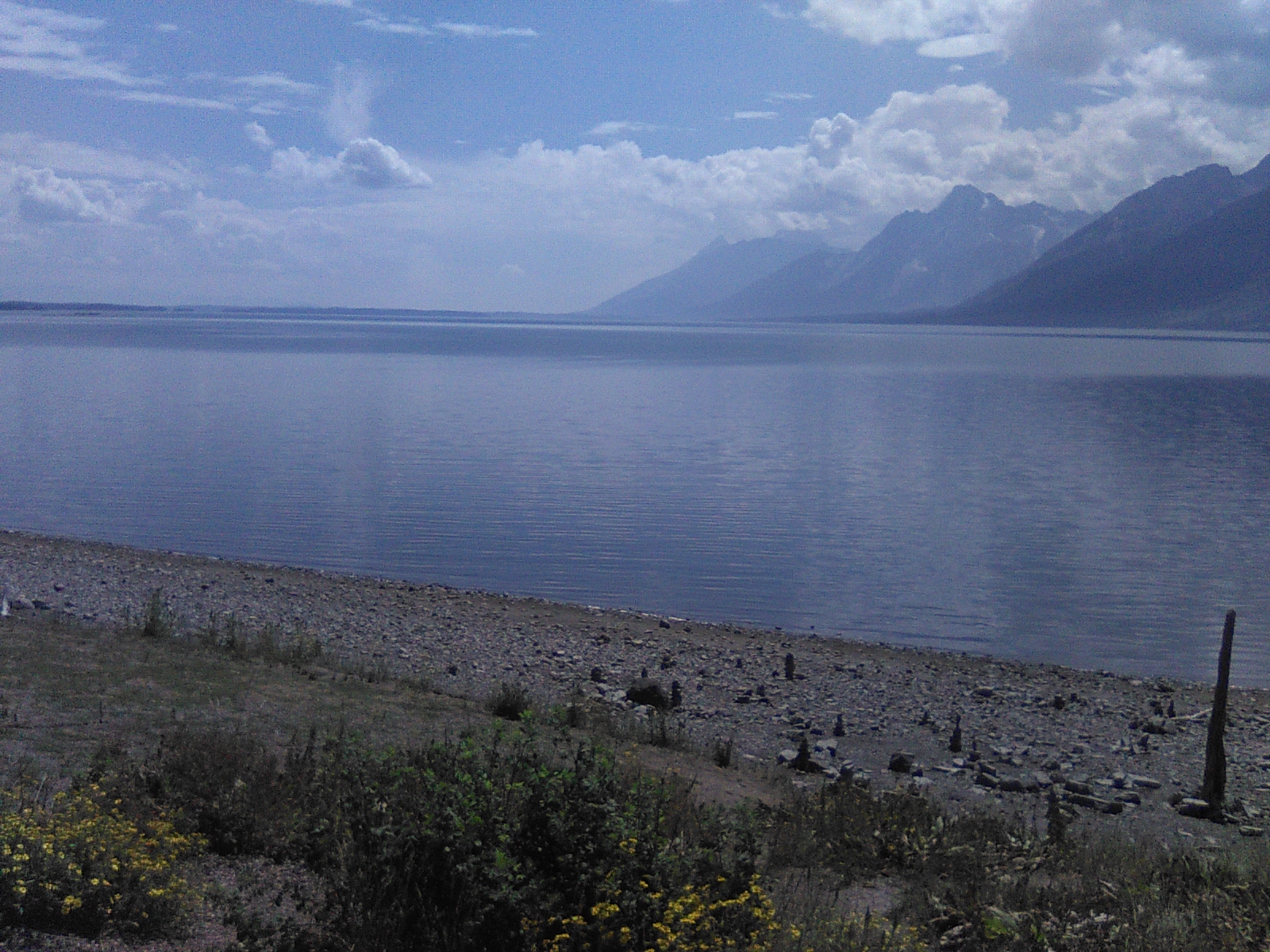
iMackenzie has a wonderful pic up called Glittering River.

I can hear the water moving…smell the scent of fish and wet soil…feel the breeze off the mountains…and the warmth of the sun upon my face…

(and I try not to think about the amount of heavy metals/pesticides/herbicides/fertilizers that have made their way into the life-giving water…but blocking it out and enjoying the moment isn’t always possible.)


Native American Drawings

Scott Sewell has several drawings posted on his blog:

Four Winds

Her Powwow Pride

Wace.  This one I love.  Such tenderness.

Dreams of Old Days

This is kinda funny.  The Native American society was not a hierarchy, like white society.  I found out recently that the Chief system was forced upon them by the whites–they had been an egalitarian society prior to that, so there were no princes or princesses…strictly a figment of someone’s vivid imagination.

The very name for whites–wasichu –was because of white people’s way of taking for themselves without regard for the others.  This name means “one who takes the fat” because the very first white man that walked into an Native American village was hungry.  He was offered some meat from a deer killed recently.  Since the deer is very lean, the Native Americans reserved the fat for the elderly and the children.  They saw this white man as selfish for his actions.

Also, if a Native American acquired wealth, he/she is expected to share that in what they called the “giveaway”.  Once a year, the wealthy will spread their things out on a blanket and those who are in need could come and take what they needed.

And they saw America as a complex ecology that required careful cultivation.  They were careful to always leave plants behind instead of taking them all.  Same with animals.  They always treated the animals with respect and prayed over the ones they used for meat, clothing and tools.

Greenpeace in France, too, against Nuclear Power

Greenpeace activists were also protesting a dangerous nuclear power plant in France.  They are concerned about the plants far-reaching effects.

There has always been a narrow-minded view of nuclear power in that only the immediate area was in danger…but as we have seen with Chernobyl and Fukushima—one country’s nightmare spreads to other countries.  The country that benefits from the nuclear power risks radiation, but countries that don’t share that benefit of power will ultimately share in the disaster of radiation.