Study links Monsanto pesticide with gluten intolerance

You know what really bothers me about this story?  They already know that pesticides, herbicides, and chemical fertilizers destroy the immune system.  It doesn’t take a rocket scientist to figure out that multiplying the chemical is going to do more harm.

So if the immune system begins in the gut, and chemicals destroy the gut…intolerance to problematic grains is a no-brainer.

Can the USDA, FDA, or anybody with a brain and ethics in Washington do something about this? Or is money going to once again trump common sense and forward thinking of not only the present day but the future, as well…..?

2014 Food Summit

Center for Food Safety is sponsoring a Food Revolution Summit this coming week- April 26th to May 4.

You can sign up for free here.  Of course, I’m not a fan of those trying to sell something but there are some good speakers listed.

(Meanwhile, this is the weirdest migraine yet–it’s been a mild painful but persistent.  I’m expecting it to get worse today…so…we’ll see. )

Eye Candy

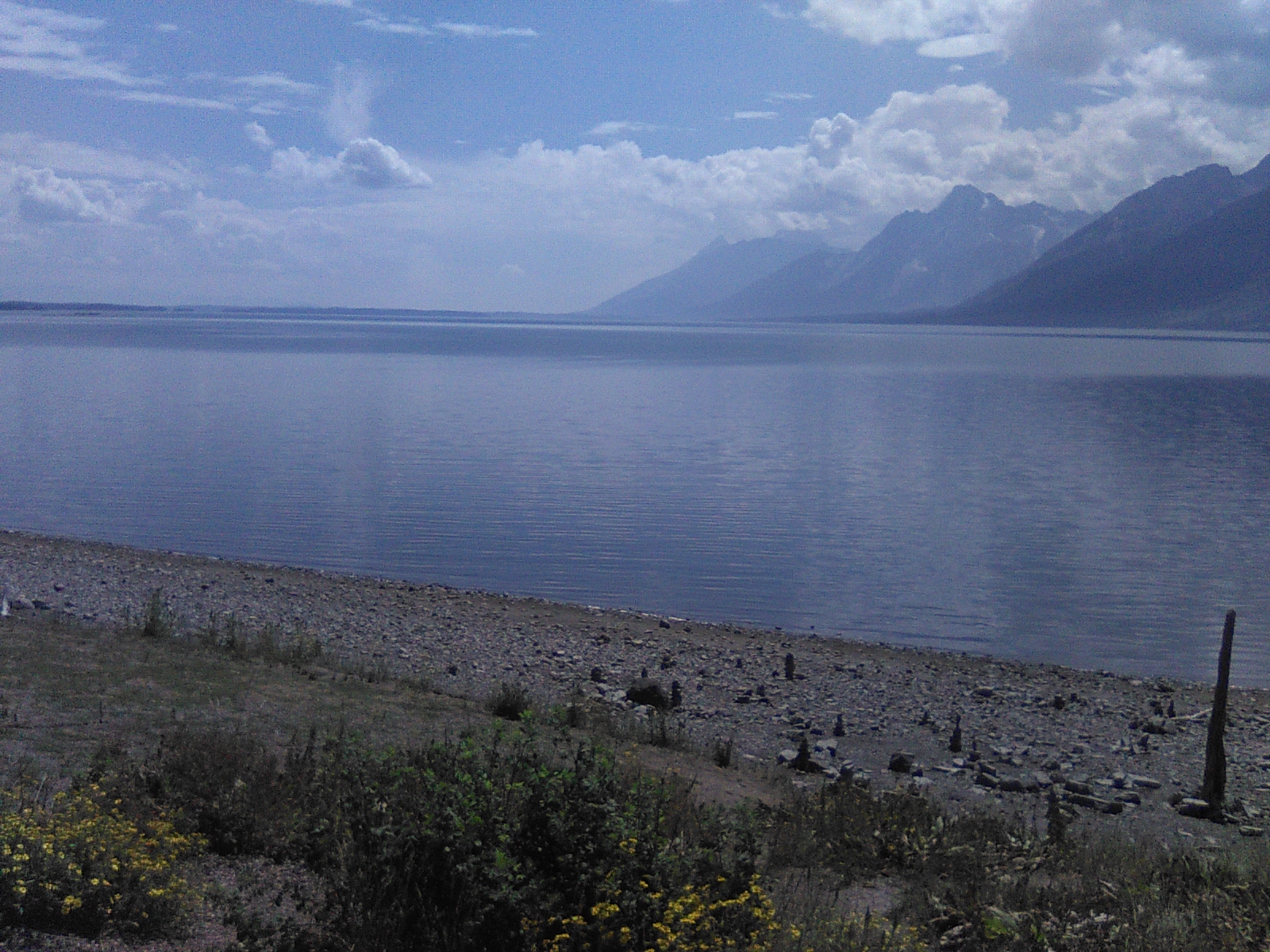
This week’s lovely pics of beautiful Canada….

Love the beach photo–I could not make out any bottles or plastic on the shore.  It looked totally untouched.  Serene.

…and I’m off to create something…I may be back later, depending on how my project goes.  The mercury severely impacted the right side of my brain, so my creativity is still struggling to return.  When I get in one of these moods, I go with it…:)

Let My People Go…Free Tillikum and all in captivity

California has a bill up to force Sea World to stop using orcas in its shows and release them from their tanks.

They are too large, too intelligent, too socially complex and too far-ranging to be adequately cared for in captivity,” said Naomi Rose, a marine mammal scientist with the Animal Welfare Institute, the bill’s sponsor.

[…]

“That argument is not based on credible peer-reviewed science,” said John Reilly, president of SeaWorld San Diego Park. “It’s based on emotion and a propaganda film.”

~~~~~~~~

Really?  Because I’m pretty sure a marine mammal scientist knows the behavior of the orcas.  Anyone with two eyes can see how the behavior of Tillikum is directly related to being held captive.

Even if there is no “scientific” standard, it’s just not right to keep an animal in captivity for the amusement of humans.  We would not want to be treated that way.

Canadians are also moving to release dolphins and orcas from captivity.  Good for them.

Water-harvesting towers

Creation Assistance has a post up on Water Harvesting towers in Ethiopia.  They had me until I read that the material is made from polythylene textile.  I read a couple of websites on polythylene, and they claim that it is not toxic although it is made from petroleum.  I don’t buy it.  How many times have they claimed that there are certain plastics that are safe….only to be told many years or decades later that they were, in fact, toxic?  Meanwhile, we poison ourselves and our kids

So. although I think it’s a great idea, there has to be a natural material that can be used to collect the water…perhaps hemp fabric woven with bamboo?


Eye Candy

Okay, I’m wondering how the guy in #3 got there?  Is that a raft that he pushed out there?  Because I don’t see any paddle to push it out there.  And I hope he’s going to eat what he catches and not just catch and throw them back.  It seems rather cruel to hook them for the fun of it.

Of course, I love the rainbows in #6 and #13…

And #1 is sooo serene…wish I were there…Bless nature for the comfort it offers us…


Saving the Amazon

Jared Leto has a link up to a video against oil drilling in the rainforest of Yasuni.  You might recall the Huaroani tribe was featured in the book Savages by Joe Kane.  He chronicled the indigenous tribes’ slowly being overtaken by the oil companies–their health, their land, and their culture.

  • Yasuni is home to over 130 globally threatened species including the giant otter, white-bellied spider monkey, golden-mantled tamarin, giant armadillo and jaguar. Extinction risks are high for all threatened species.

  • 655 different tree species have been identified within 1 hectare of land.

  • For reptile biodiversity, it is the 2nd richest area in the world.

  • More insect species are found in Yasuni than any other forest.

  • There are more frog and toad species within Yasuni than all of North America combined.

  • Ecuador has the 9th highest mammal biodiversity, and over half reside in Yasuni.

  • Many species are endemic to Yasuni.

  • It is home to the 5th largest bat reserve.

~~~~~~~~~~~~


The petition to sign here.  Please don’t think because it’s *there* that it doesn’t affect us in America.  It does.  Everything is connected and when a species (plant or animal) dies, it affects other species….a domino effect, if you will.

Given that bats are dying of a disease of unknown origin, (yeah, it’s probably caused by chemical toxins), we should sit up and take notice that this area contains the 5th largest bat reserve.

Here are some of the unique species to Yasuni.


The Life of Plants

I just watched one of the most interesting Nature shows to date.  And no animal violence, go figure! /just a little snarky

The program was on plants and their ability to communicate with one another.

It started with showing a plant that could not produce its own food, so it was basically a vampire plant that sucked the life out of other plants.  It seemed to prefer certain plants over others–the tomato being one of them.  The scientists performed an experiment where they placed the vampire plant in the middle, with the tomato plant on one side, and another plant placed on the other side.

Using time-lapse photography, they showed the vampire plant doing this little whirling dance around and around until it finally latched onto the tomato plant.  It did this 9 times out of 10.  So, it basically chose the tomato plant.  Isn’t that interesting?

Then they went on to another plant in the west that was making a nuisance of itself.  The name escapes me, but it has destroyed native grasses that the cattle farmers rely on to feed the cattle.  The scientists were trying to find out why this particular plant was able to thrive.  The rancher pulled up a plant by its roots, and showed a small worm/larvae just going to town on the roots…and yet the plant was still thriving.  So there had to be another reason the plant was able to fend for itself.  They discovered that it was sending out chemicals via its roots that killed off other competitor plants’ roots.  Isn’t that amazing?

They also said they knew that plants sent off scents, but they discovered that they also send off warning scents, or what amounts to a “scream” by the plant when they are being attacked.   They illustrated this by stating that the smell associated with freshly mowed grass is the grass “screaming” from being attacked.  The theory is that the plants are trying to warn the other plants that they are being attacked.  The other plants in the area beef up their defense mechanisms.  Wow.

Finally, they wondered about “mother” trees aiding her “babies”.  The theory wasn’t new, they said, but they hadn’t been able to prove it.  So, a research team injected radioactive carbon into a douglas fir and then went back after a time with a geiger counter to see where the carbon ended up.  They found the most concentrated amount in baby firs nearby.  They also found it in carbon “trails” to other firs in the area that belonged to the same plant family. I had one issue, though, with this–and this may have been done, but the program didn’t show it–they didn’t run the geiger counter on the ground or around the trees before injecting the fir with the radioactive material.    This, to me, would have been a “control” to make sure that the radioactivity wasn’t already there from, God forbid, Fukushima or some other source.

So…all of this is not news to the Native Americans, whom have always believed that plants had a “life”. Everything is connected–plants, too.

Yeah, we’re slow as always in catching up to the wisdom.  But at least we’re getting there. 🙂