10 Foods that are high in Protein…

…but you wouldn’t have guessed them.

Here’s the nutrition data sheet on:

Peas

Black Beans (not pasta, mind you)

I was looking for the absorption rate of the protein because one of the issues that Dr. Natasha Campbell-McBride- (GAPS diet) has with vegetarian diets is that the body does not absorb plant protein as well as animal protein.  And then there’s the debate on how much protein we really need to be healthy.  They make note that athletes and active people need more, but then leave people in the dark about their definition of “active”….is someone active who exercises two days a week?  Three days? Is an athlete someone who exercises an hour every day?  One bodybuilder site mentions that their standard is two hours a day (for bodybuilding).  It would be easier if they could give more definite terms such as body weight, hours exercised, days exercised, and how much protein is required for those levels.

Lastly, what about the effect of GMO’s and food absorption?  What about inflammation?  If you are consuming beef that is fed GMO corn, how is that being absorbed?  Since beef is more slowly absorbed, does it cause more inflammation than if one is eating organic vegetable protein?  All of those factors need to be considered, too.


Banned chemicals linked to autism **edited

Global News has a post up on an SFU (? university isn’t named) professor that has linked autism with Chlordane and flame retardant PBDE-28.

Chlordane was in use in the U.S. until 1988. It has been linked to testicular cancer, lymphoma, and leukemia.

It has more widespread indications of affecting the health, however:

The non-cancer health effects of chlordane compounds, which include migraines, respiratory infections, diabetes, immune-system activation, anxiety, depression, blurry vision, confusion, intractable seizures as well as permanent neurological damage,[13] may affect more people than cancer. The Agency for Toxic Substances and Disease Registry (ATSDR) has defined a concentration of chlordane compounds of 20 ng/M3 as the Minimal Risk Level (MRLs). ATSDR defines Minimal Risk Level as an estimate of daily human exposure to a dose of a chemical that is likely to be without an appreciable risk of adverse non-cancerous effects over a specific duration of exposure.[14]

~~~~~~

Good Grief, this stuff is uber toxic!  The fact that seizures and migraines are symptoms lends more credibility to it affecting neurological function…as in autism.  So…it’s not just mercury and heavy metals that can be linked to autism.  And multiple exposures of both just spells disaster, imo.

You know what’s missing from the wikipedia link?  The manufacturer(s). I found one of them here.  Big surprise, eh? /snark

When does Monsanto start to pay back for all the misery they have caused the world?  Anybody?

There’s a much better written article here.  Gah,the more I read, the more alarmed I get, as if I wasn’t alarmed enough.  It appears to be as persistent for remaining in the environment and not breaking down, just like DDT …

It is not known whether chlordane breaks down in most soils. If breakdown occurs, it is very slow. Chlordane is known to remain in some soils for over 20 years. Persistence is greater in heavy, clayey or organic soil than in sandy soil. Most chlordane is lost from soil by evaporation. Evaporation is more rapid from light, sandy soils than from heavy soils.

Half of the chlordane applied to the soil surface may evaporate in 2 or 3 days. Evaporation is much slower after chlordane penetrates into the soil. In water, some chlordane attaches strongly to sediment and particles in the water column and some is lost by evaporation. It is not known whether much breakdown of chlordane occurs in water or in sediment.

Chlordane breaks down in the atmosphere by reacting with light and with some chemicals in the atmosphere. However, it is sufficiently long lived that it may travel long distances and be deposited on land or in water far from its source.

~~~~~~~~~

More:

Finally, some chlordane may be left over from the pre-ban days. Old containers of material thought to contain chlordane should be disposed of carefully and contact with the skin and breathing vapors should be avoided.

~~~

Here’s what bothers me about this statement–what exactly does “dispose of” mean?  How should it be disposed of?

It’s just shuffling it from one area to another.  It’s not a solution.  It just doesn’t magically disappear.  It becomes a problem for the next hapless person who comes in contact with it, unaware of the danger. And that usually means poor people, who don’t know about their toxic environment and if they did, they don’t have the $$$ attention of politicians $$$ who can do something about removing it.

Truly, the only solution is not to allow these toxic substances into the environment to begin with.

Greenpeace protests logging in Canada

Report here. 

What bothers me is when I see trees torn down for yet more construction when there are thousands of empty buildings waiting to be occupied.  There should be a law that prohibits this–we don’t have the luxury of time anymore.  We need those trees to take the carbon dioxide out of the air and provide us with fresh oxygen.  Indiana is especially bad about destroying forests–when you look at aerial photos, you can pick Indiana out just by the lack of trees.   You can tell such a difference when leaving Indiana and going to Ohio–the air is better.  Combine this with the 15 million pounds of toxins released into our waterways…toxic soup.  (sigh)

Heavy Metals and Chemical Toxins in Foods **edited

Where’s my spoon?  /snark

Magnetic Wheaties.  The press refused to publish this because they didn’t think it was real.  Anyone want to test their own Wheaties and dispute it?

Heavy Metals in Vegan foods. 

Sea vegetables.

Here’s another paper on heavy metals content in foods.

Arsenic in food.  The discussion is in defense of reports of arsenic in organic foods.  What the news reports got wrong was that heavy metals are present in conventionally grown foods, too.  It’s not a fault of growing them organically…but it is a fault of our toxic environment—which we are all responsible for promoting.

Another link here.

While there is a set legal limit for the amount of arsenic in water, that’s not the case for food. In previous weeks, researchers also detected high levels of arsenic in apple and grape juices. “All of these arsenic studies come back to the fact that there are multiple exposures, with the levels varying from product to product and batch to batch,” says Patty Lovera, assistant director of Food & Water Watch, a consumer safety organization. “We need to figure out some regulatory limit.”

~~~~~~~~~

Arsenic in rice has been discussed on the mercury support group–obviously, we’re concerned about putting more poison in our bodies.  It’s frustrating as hell because even if you eat organic, you’re still at risk of heavy metals by the soil contamination.

Someone said in a reply on one of the sites I visited:  you’re pretty much going to get exposed by anything you eat…nothing is safe.

But I would not give up organic food.  Conventionally grown food is less nutritious, besides polluting the environment even more–it doesn’t make sense on that point alone.

Finally, here’s a disturbing video produced by Environmental Working Group on toxic chemicals in babies’ blood.

I looked up the Kids Safe Chemicals Act of 2008…and I’ll give you three guesses how it turned out.  Yep.

But, wait!  There’s yet another bill introduced with link to co-sponsors…here’s where it stands. 

Sen. Frank Lautenberg [D-NJ] Bill Author

Kirsten Gillibrand [D-NY] Bill Author

Max Baucus [D-MT]

Michael F. Bennet [D-CO]

Richard Blumenthal [D-CT]

Barbara Boxer [D-CA]

Maria Cantwell [D-WA]

Benjamin Cardin [D-MD]

William “Mo” Cowan [D-MA]

Richard Durbin [D-IL]

Dianne Feinstein [D-CA]

Al Franken [D-MN]

Tom Harkin [D-IA]

Angus King [I-ME]

Amy Klobuchar [D-MN]

Patrick Leahy [D-VT]

Robert Menéndez [D-NJ]

Jeff Merkley [D-OR]

Barbara Mikulski [D – MD]

Patty Murray [D-WA]

Bill Nelson [D- FL]

Bernard Sanders [I-VT]

Brian Schatz [D-HI]

Charles Schumer [D-NY]

Jon Tester [D-MT]

Tom Udall [D-NM]

Elizabeth Warren [D-MA]

Sheldon Whitehouse [D-RI]

Ron Wyden [D-OR]

Again, no mention on the toxins’ effects on the animals and birds.  Mercury has been found in birds on land and sea birds.  It’s also been found in marine mammals.

**edited to correct wording.

Radiation from Fukushima found in soil in Canada

Soil sample collected near Agassiz contains radioactive metal.

…but officials say…wait for it…don’t worry, it’s not that much…yeah, we should worry.

We should be worried, too, looking at this map.  It’s not just on the tip of the coast, but quite a ways inland.  Just look at the relation to the U.S.

Can you imagine this, combined with Keystone and the pipelines that have already leaked, combined with pesticides, herbicides, chemical fertilizers, genetically modified organisms…

Vegetarian diet and heavy metals

Along my path of change, I was re-examining everything, including eating meat.  I became a vegetarian at about 1997.  My kids thought their mother had lost it.  It’s not easy changing to vegetarian when you’re responsible for cooking for the family.  I had to get everyone’s needs met.  They actually liked a bulgur wheat and lentil burrito I made, plus some other dishes.  But they did not want to convert fully to vegetarian diet, which I understood.

In 2006, I was advised to go back to eating meat due to severe anemia.  I didn’t know at this time that I was heavy metal toxic–that would be another year before my discovery.

I did not want to go back to eating meat, but my body had been craving it, so I knew the advice was sound.  I talked about it with a lady whom had been a vegan, and she too had to go back to eating meat.  Her theory was that some of us are just genetically set up to require meat, while others could do quite well without it.

Dr. Natasha Campbell-McBride said in her book of the GAPS diet, which heals the gut, that she did not recommend vegetarian diets–she saw many in her practice that were not healthy.  She saw a problem with vegetarians eating a lot of soy and grains.  I am guilty of this–I was eating a lot of tofu and pasta.  One of my favorites was eating spaghetti with olive oil and garlic.  Yum.  But eating this is not doable for Celiacs.  (Not to mention non-organic pasta being GMO)

I polled the mercury poisoning group about being vegetarian.  One was a vegetarian all his life until chelation.  He said he felt heavy and sluggish–he felt better and had so much more energy when a vegetarian.  I have to agree to that–I had so much more energy and my skin glowed. It was unfortunate that as I was beginning the vegetarian diet, my body was becoming more toxic from the mercury.

Another group member said it was just too hard on the body and with dietary restrictions, it was impossible to chelate without eating meat.

They were all under the impression that they could not go back to just a vegetarian diet–one said he hoped to go “almost” vegetarian, with eating some meat, but not totally meat-free. 

I don’t know.  Time will tell. 

My environmental journey

The critics of environmentalists claim that we’re phonies…okay, well, here is my journey…

…my advocating for the environment has been a slow evolving process that includes my experience with mercury poisoning, growing awareness of what we’re doing to the atmosphere, and a spiritual component of realizing everything is connected.

Here are some of the things I do:

–use cloth bags when going to the grocery.  I might use plastic for meat, but I re-use those bags, too, bringing them to the grocery along with the cloth bags.  If you use the cloth bags for meat, be sure to launder them before using again, to avoid contamination.

–avoid plastic packaging. …well, plastic *everything*.   This has been much easier following the GAPS diet because you don’t eat the processed food in packaging, but real food.  If I am given an option, I will buy something in glass packaging before plastic.

—re-use the glass containers for drinking glasses, food storage, plants, etc. I try to avoid ziploc bags when possible.

—don’t purchase synthetic materials like nylon and other materials requiring petroleum.  The list I think is a catch-all, because I think some of the things listed are made with petroleum if plastic or manufactured cloth such as nylon, so some of the products listed could be okay if not using those materials.  Here’s a website on organic cotton, fyi.

–When I had my home, I made a conscious decision not to pave the driveway–it was gravel.  I didn’t spray for weeds, either.  I let my grass grow to 3 inches so that the roots could grow deeply enough to avoid having to water the lawn, especially during the dry time in July–this also helped keep the weeds down. Meanwhile, my neighbors practically shaved the grass off and…wait for it…had to waste precious water to keep the grass from dying in July.    I let a patch of ground that was the former owner’s garden, grow its natural way, without my interference.  Yeah, I was the neighborhood hippie…

—use baking soda, borax, and vinegar for cleaning.  A formula I found in a natural health mag goes like this:  Bathroom cleaner:  6 T vinegar, 2 T borax mixed with a cup– of warm water.  Put this in a 1 qt. spray bottle and fill the rest with water.  Works great, especially if used every day.

—I would like to use non-toxic natural cleaners for laundry, dish washing, etc., but with my finances, this isn’t doable right now. Oh, and fyi, avoid dishwashers–the detergent used in them is highly toxic.

—ride a bike or walk when going somewhere.  This was easier for me when I lived in Fort Wayne, where everything was within walking distance.  I could get to the downtown in 45 minutes to an hour.  There is something to be said for walking or riding–you are much more connected to what is going on around you.  You hear the birds sing.  Feel the breeze.  Hear the ripple of water along the river…driving a vehicle cuts you off from so much, besides polluting.

—use flannel cloths instead of toilet paper and re-wash them.  I know, I know, some of you are going “ick” right now.  No. 1 is fine…No. 2 still requires paper. So there.

—cloth pads instead of chemically manufactured pads.

—use less.  I just use less.  This was part of the learning process of being poor–you just learn how to manage on less.  Not easy, for sure.  I became much more adept at planning meals and using food up before it went to waste.  I didn’t buy as much at the grocery until I needed it.  This is easier if the grocery is within walking distance….which is becoming harder as the independents are being forced out while big box stores are situated out in no-man’s-land, forcing people to drive there.

—garden organically, using compost from kitchen waste, and if you’re really adventurous, pee and poo.   This is not for sissies…so come with your brain in active mode and your determination to get away from petroleum and chemicals.  You will succeed, but you can’t give up when challenged.  Nature does challenge you, but also gives such splendid rewards. 😉

This is an ongoing process, for sure.  I didn’t just wake up one day and start doing all of this.  It was a gradual endeavor with every new discovery of my own contribution to pollution.

So…there you have it…my efforts towards helping instead of hurting the environment.

I think if we all took those first steps, and built on that, we would greatly reduce our dependency on petroleum.  Everything helps and every bit matters.
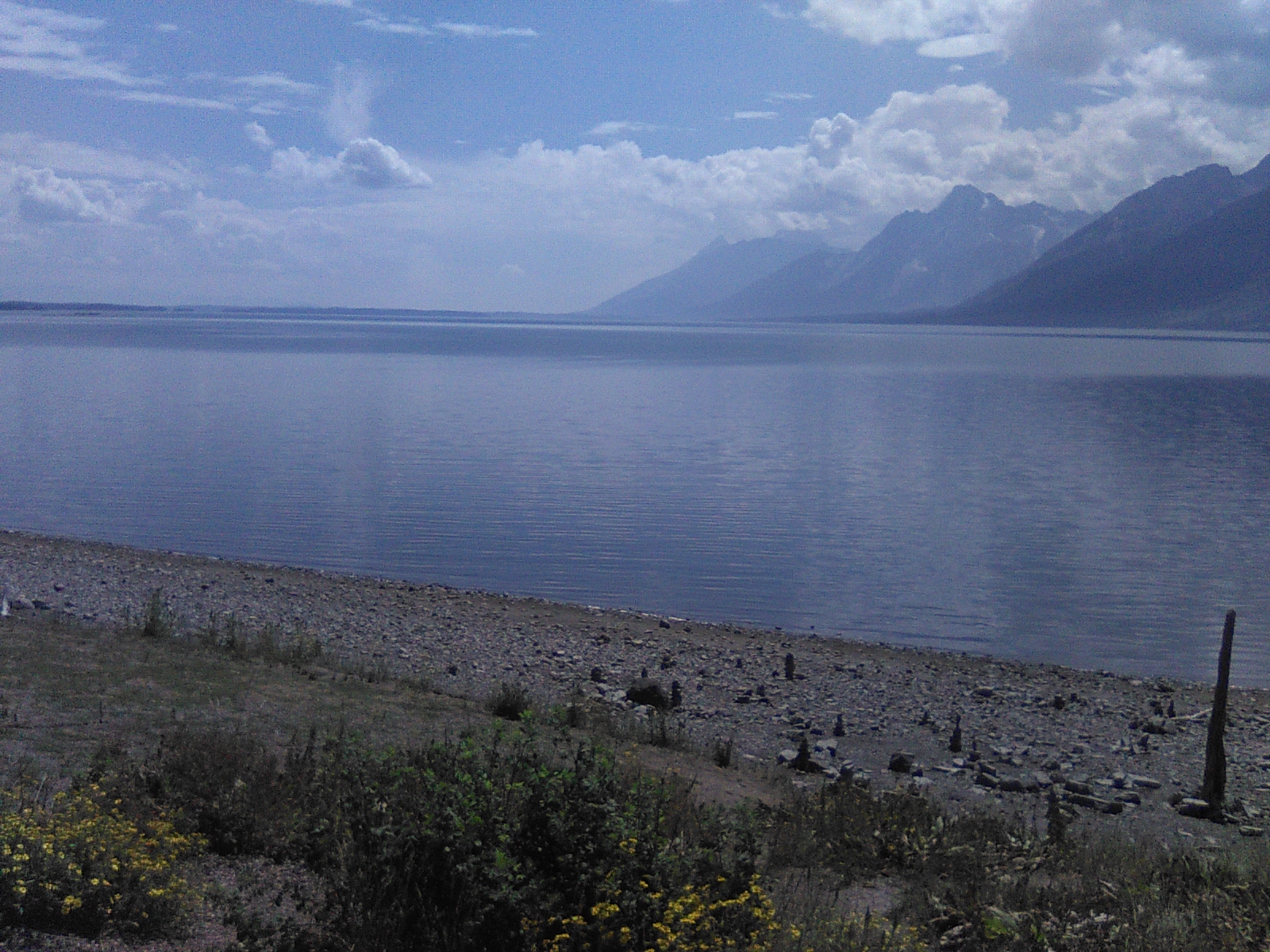


It’s Cloud Illusions I Recall…

I really don’t know clouds at all…

(from Joni Mitchell’s Both Sides Now)

City Jackdaw inspired this with his post.

You can still see with the imagination…as long as those aren’t chemtrail clouds**, which invariably are shapeless flat expanses… that you really should not be under after sprayed…your health depends on it.

**brought to you buy Bill Gates and his two, count that, two, scientists who have all knowledge of all the universe to control weather and kill us in the meantime….